Curvahedra
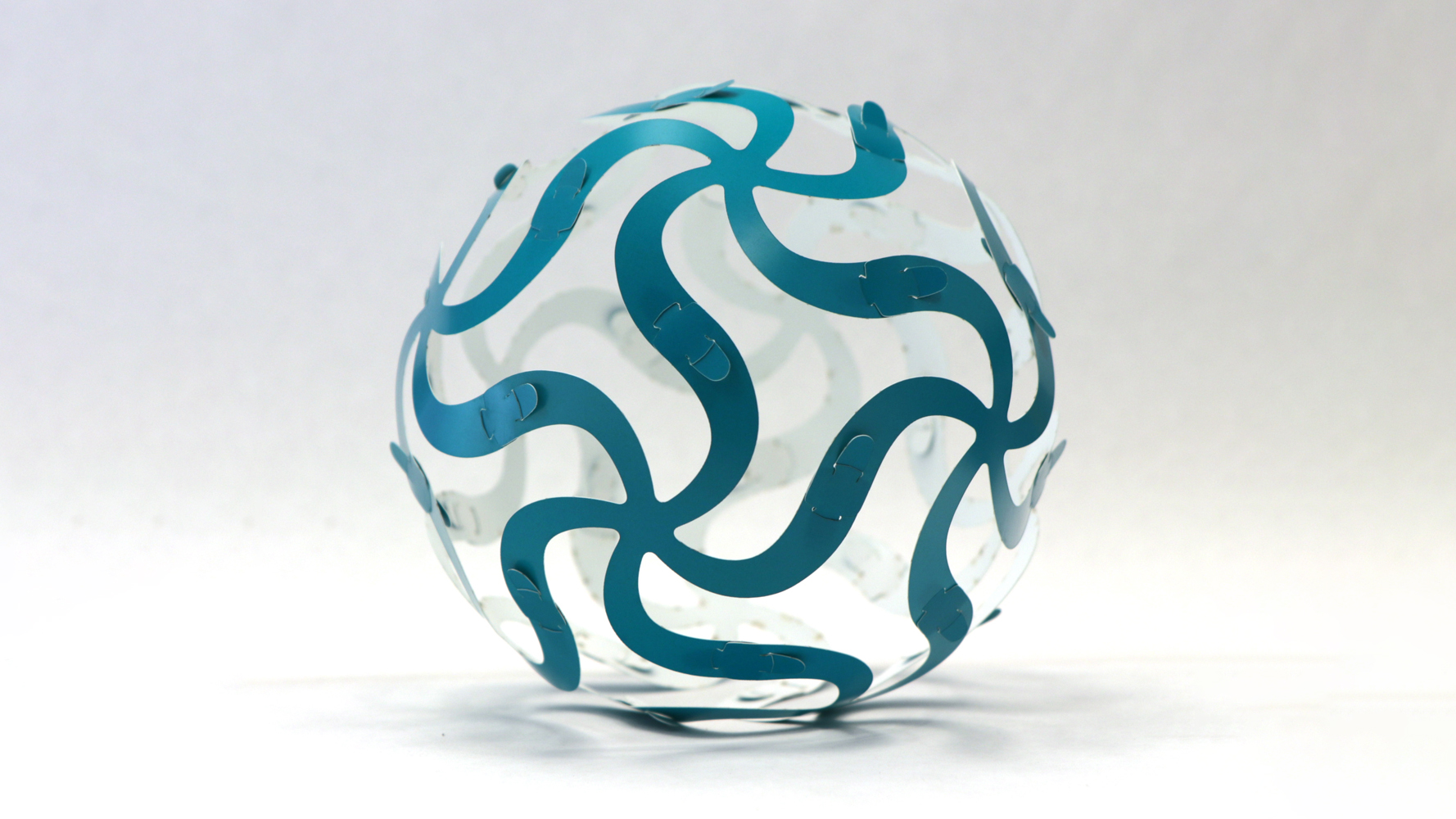
A modular construction system based on the Gauss-Bonnet theorem — identical curved pieces that zip together without glue to form spheres, toruses, and other surfaces. Began as a paper puzzle, funded via Kickstarter in 2016, and became a commercial product at curvahedra.com. The same geometry underlies the Gearhart Hall courtyard sculpture and the Zip-Form fabrication system.
2016-01-01
Projects
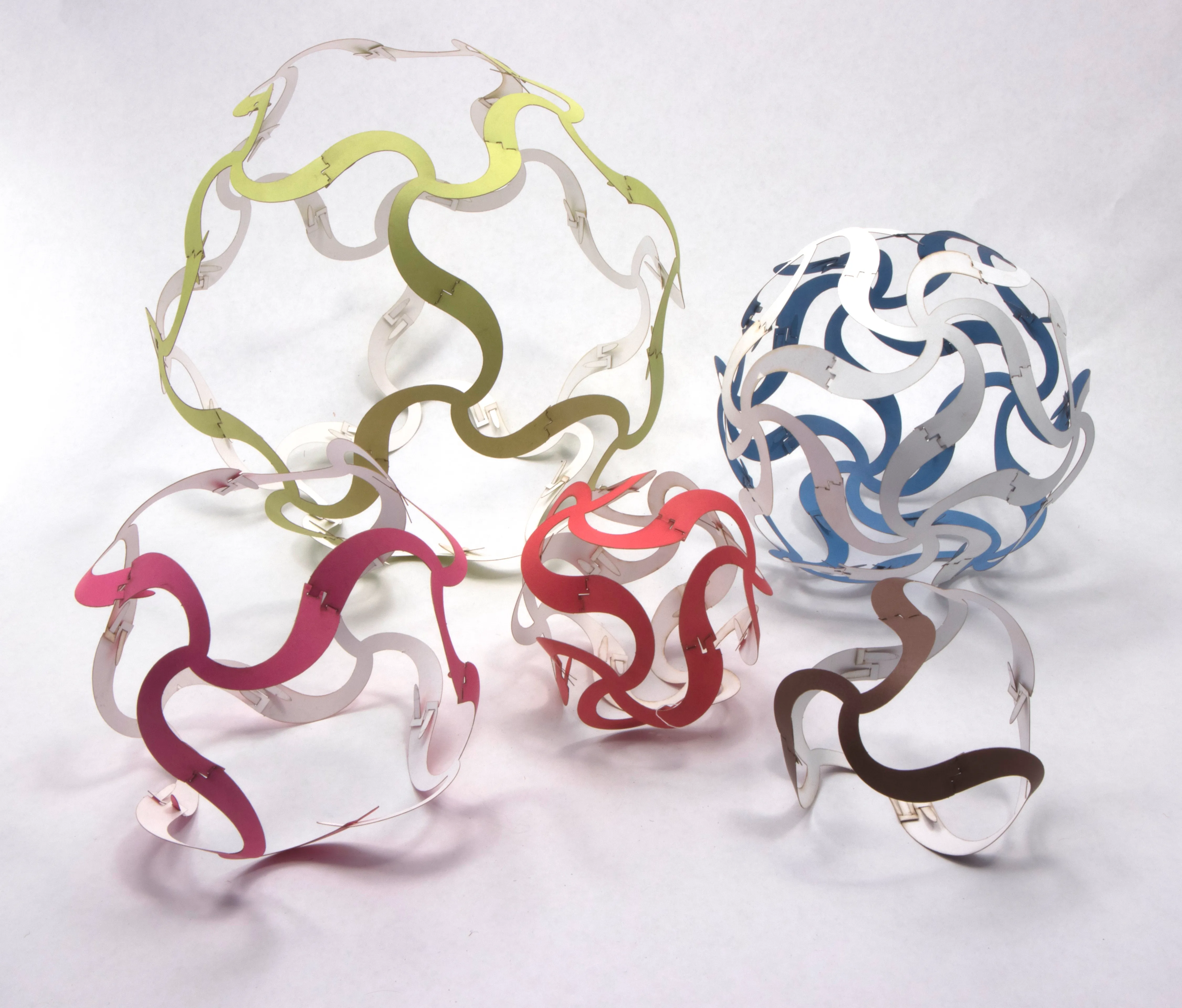
Curvahedra Kickstarter
Crowdfunding campaign that launched Curvahedra as a physical product, with the original paper models. 385 backers pledged $17,741 against a $15,000 goal.
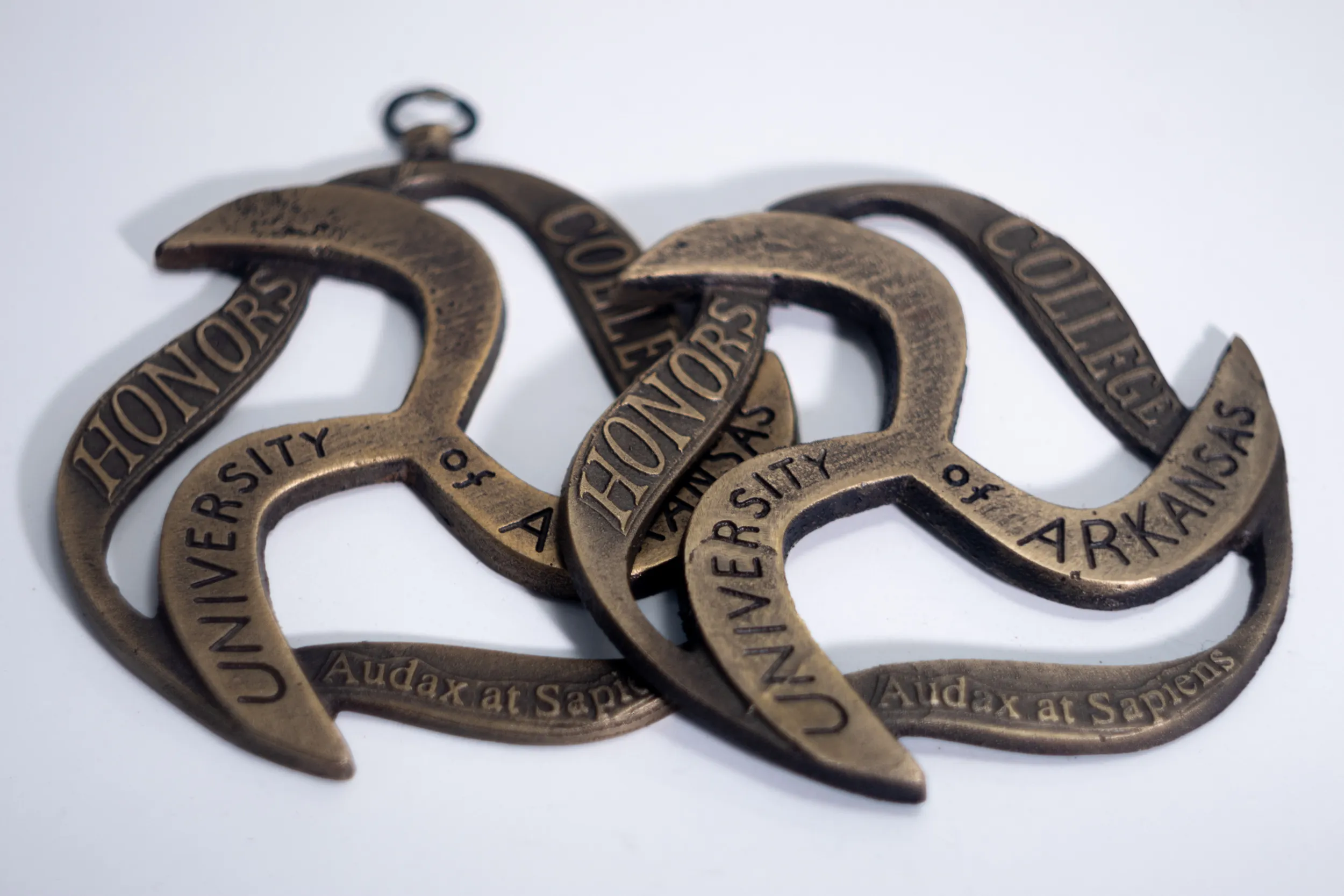
Curvahedra Medal
A medal created with Eugene Sargent for the University of Arkansas Honors College's Distinguished Faculty Award in 2024/

curvahedra.com
Commercial home of the Curvahedra puzzle system.
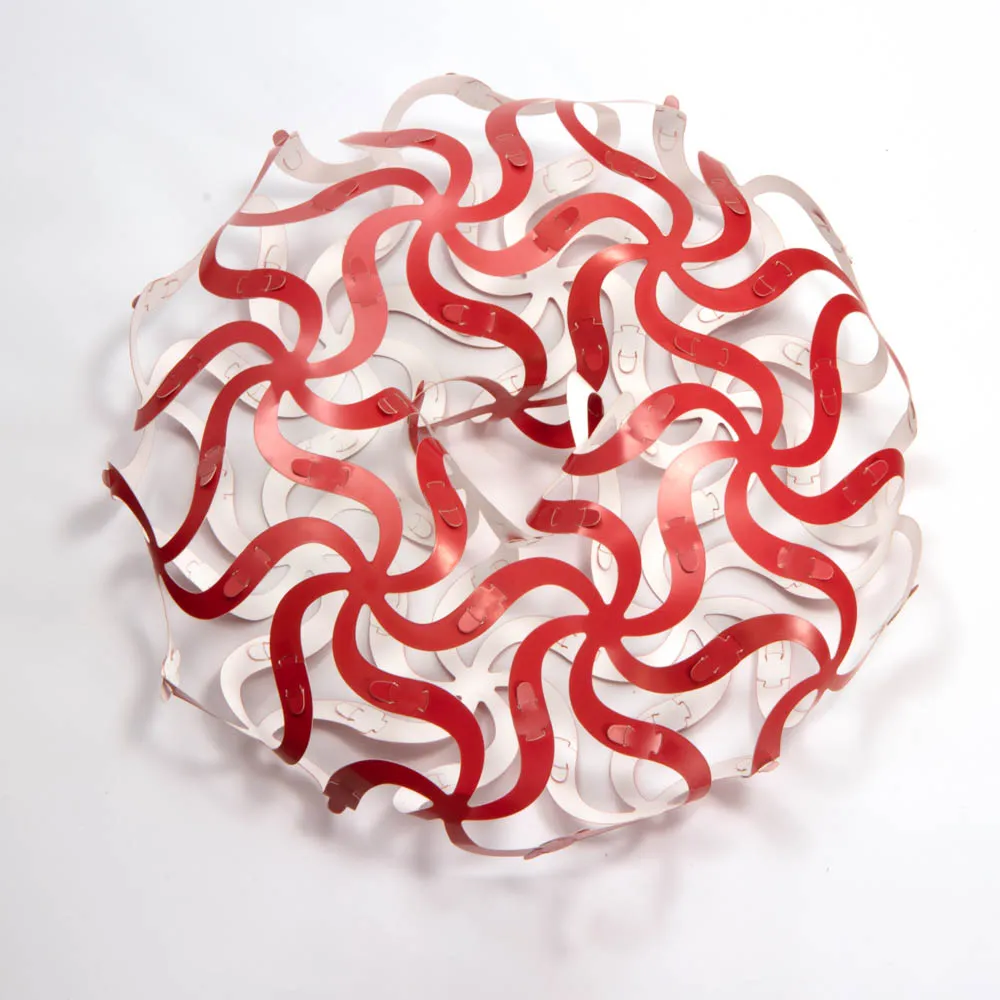
Gauss-Bonnet Sculpting
Combining curvahedra with the Gauss-Bonnet theorem to select local curvature from holonomy
Related
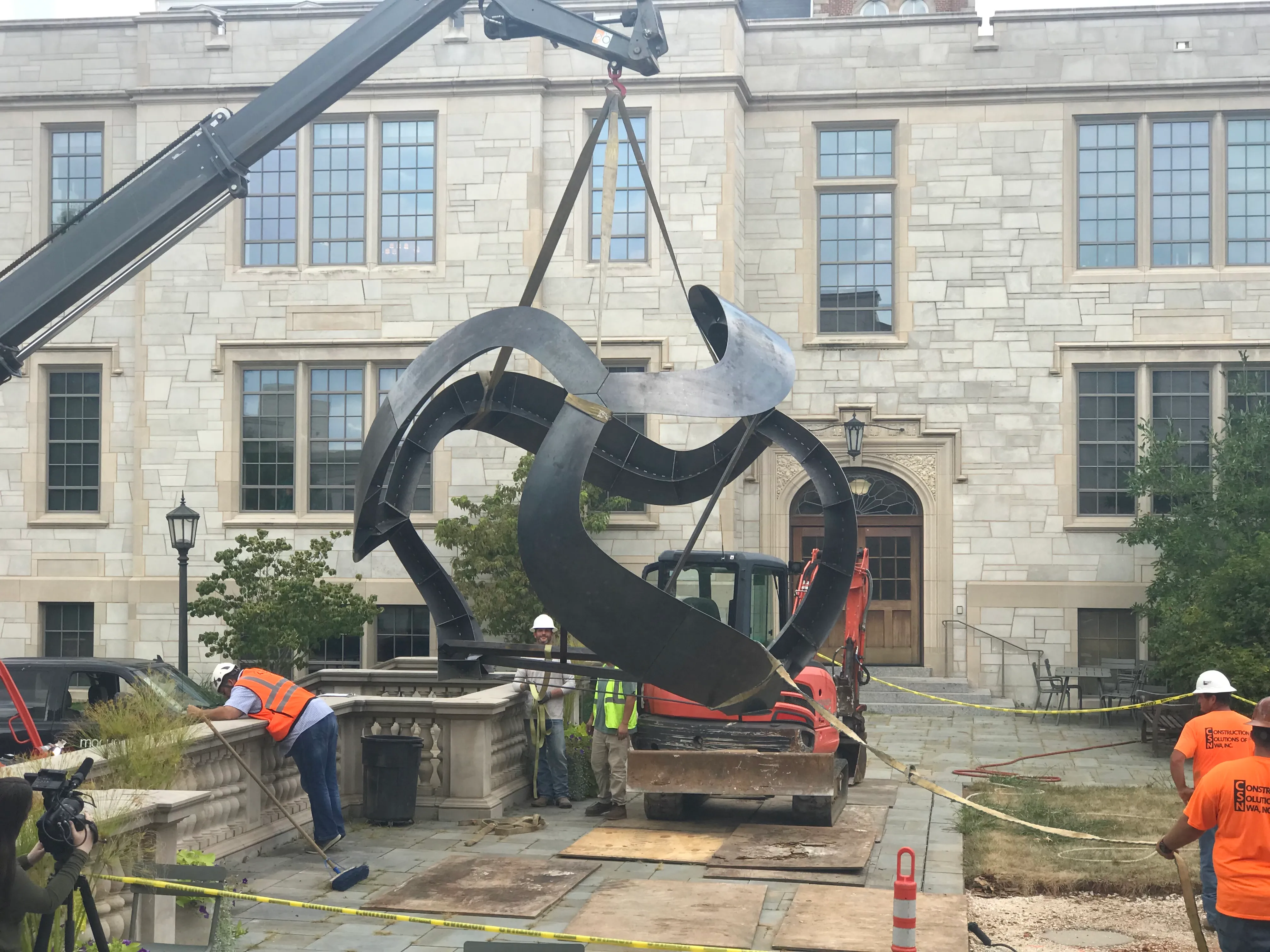
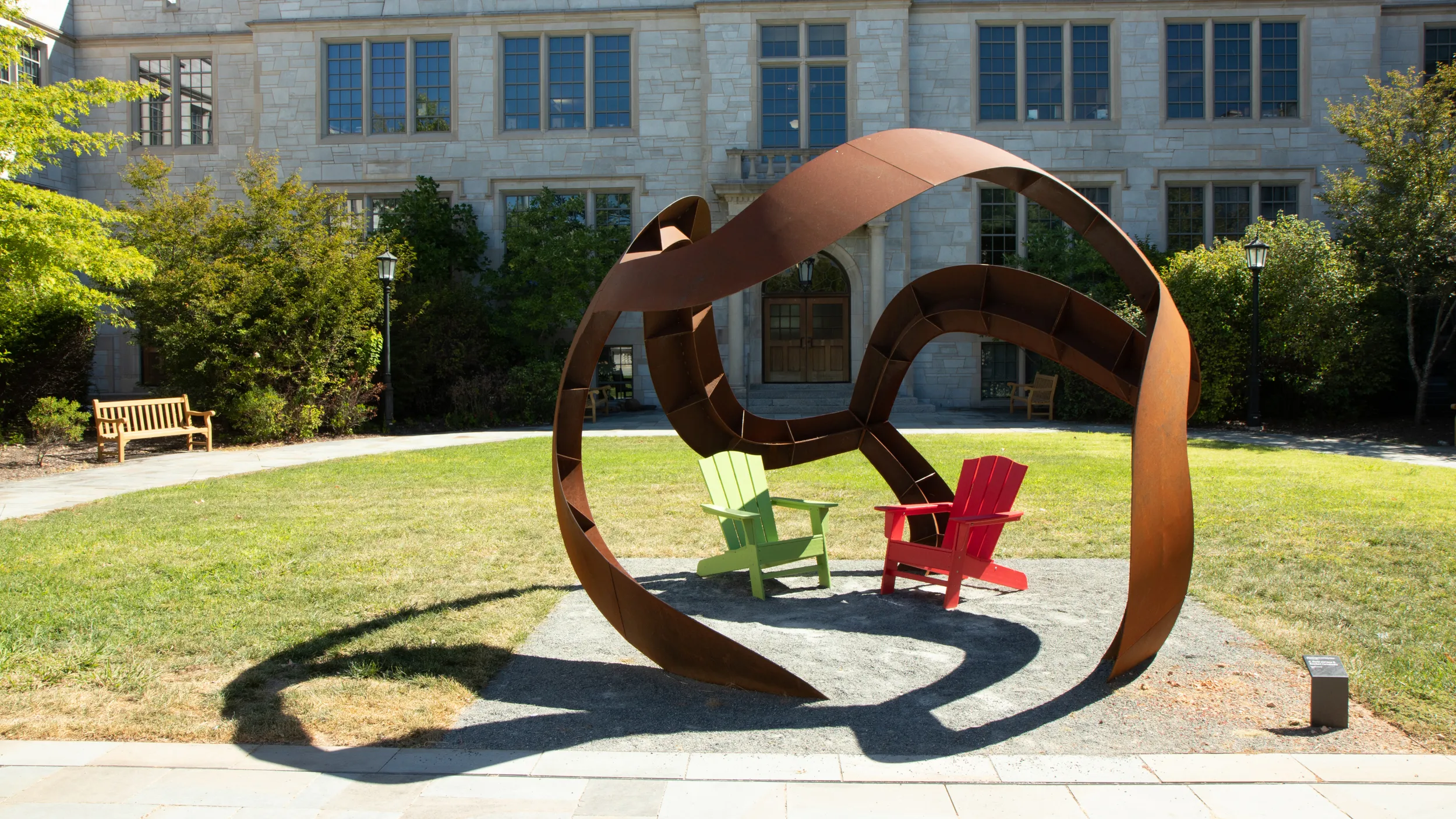
Gearhart Hall Courtyard Curvahedra
A permanent 12-foot diameter steel sculpture installed in the Gearhart Hall courtyard at the University of Arkansas. In collaboration with Emily Baker.
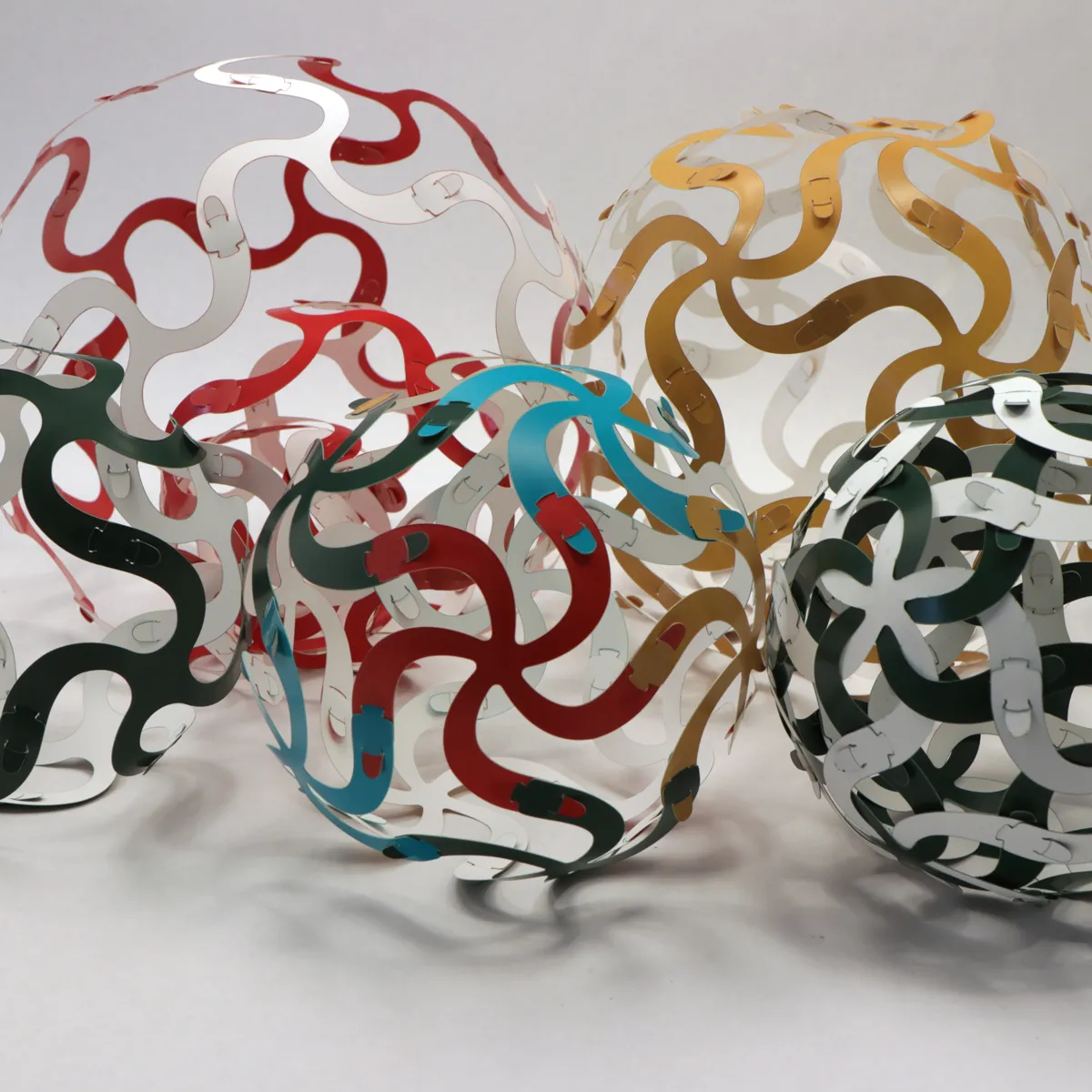
ICERM Illustrating Mathematics Exhibition
Exhibited three works during the ICERM semester programme: "Curvahedra" (cut Mylar), "Three studies in CNC milling" (CNC milled wood), and "Pseudosphere" (CNC milled wood).
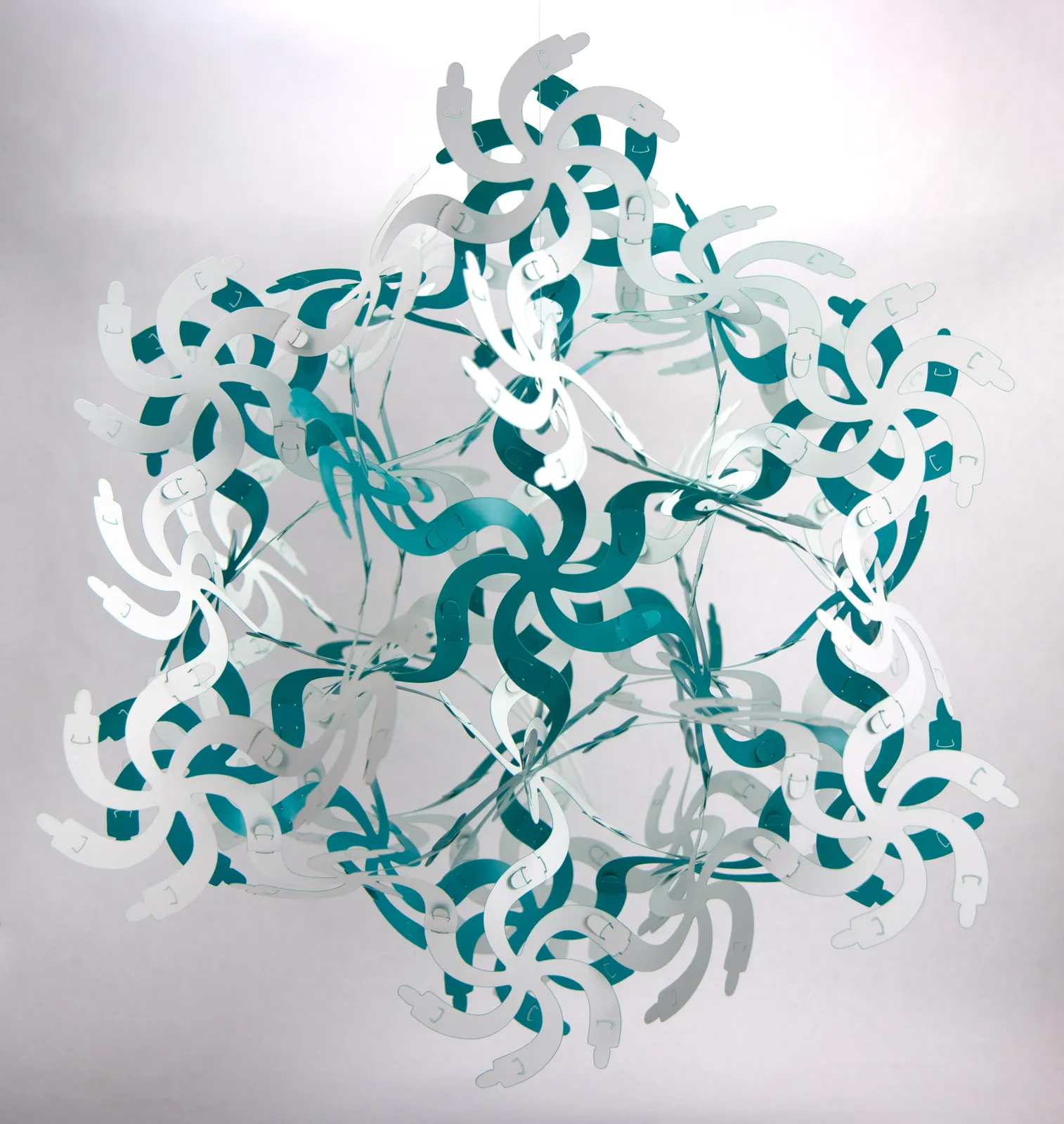
Three Triply Periodic Minimal Surfaces
Three 3D-printed models of triply periodic minimal surfaces, the Schwartz P, Schwartz D, and Gyroid surfaces.
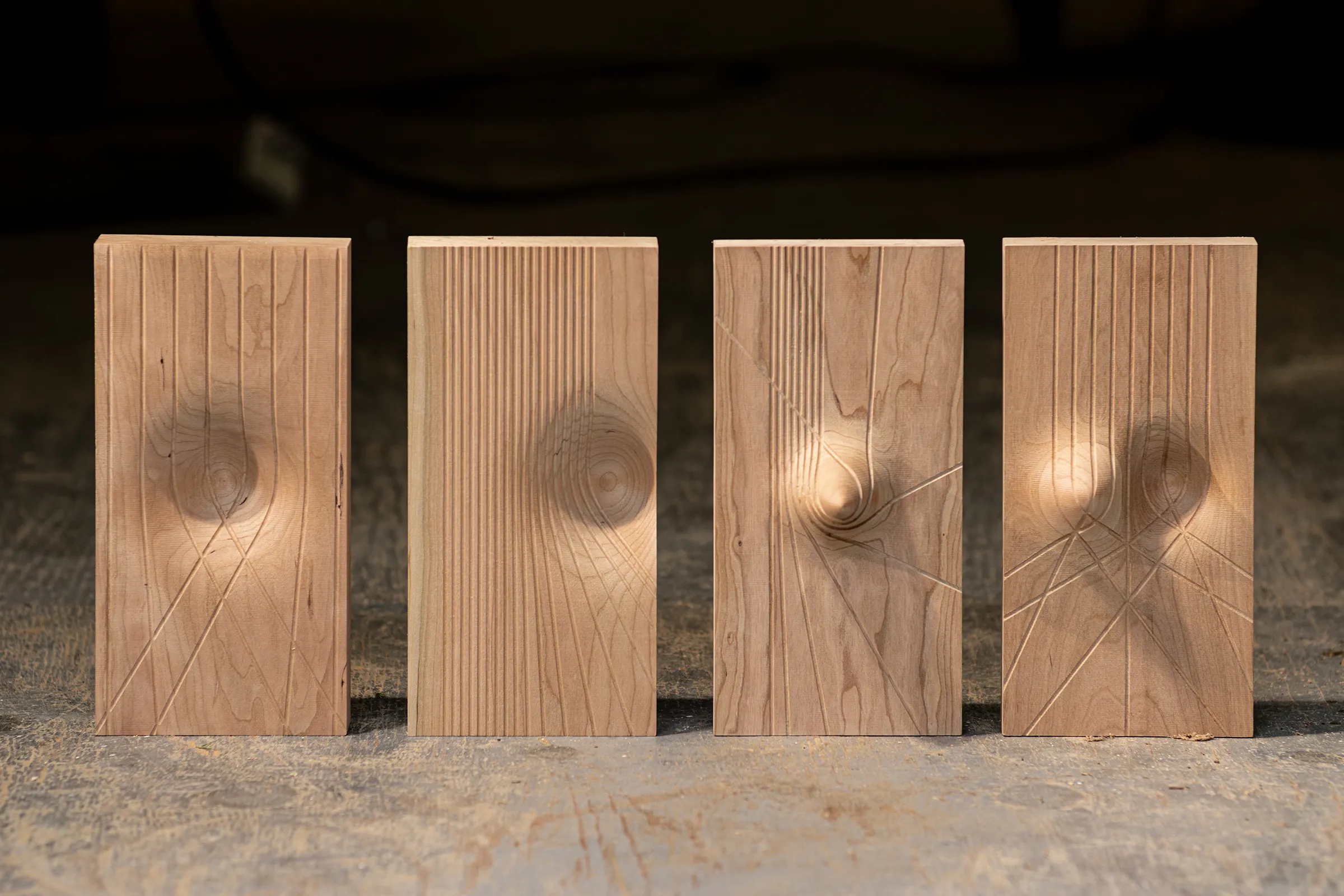
Warped Realities: The Art of Differential Geometry
A group exhibition at the Composite Gallery, MoMath, bringing together works by Edmund Harriss, Henry Segerman, Steve Trettel, Stepan Paul, Chaim Goodman-Strauss, Robert Fathauer, and Nico Belmonte. The show — described in the proposal as "Straight and curved: artifacts from an abstract world" — creates a wonderland of geometry whose pieces illuminate how geodesics behave on curved surfaces, how holonomy (the Gauss-Bonnet theorem) relates turning to curvature, and how surfaces can deform without changing their intrinsic geometry (Theorema Egregium). Harriss's contributions include: **Geodesic Boards** — twelve 6×12" cherry boards CNC-carved with surfaces and engraved geodesic paths, paired with an online calculator; **Holonomy Blocks** — three interactive pentagonal loop tracks with a movable rook that reveals how parallel transport accumulates turning on spherical (120°), flat (108°), and hyperbolic (90°) surfaces; **2-ply veneer Curvahedra models** — assemblies whose corner angles can be varied to redistribute curvature, showing how the Gauss-Bonnet theorem constrains the overall shape; and **Foam hyperbolic surfaces** — large brightly coloured flexible sheets with negative curvature. The exhibit is subsequently supported by the Simons Foundation for presentation at the 2026 International Congress of Mathematicians.
Zip-Form
A computation-and-fabrication system for creating curved architectural forms by zipping flat-cut pieces together. Developed with architect Emily Baker at the University of Arkansas, Zip-Form pairs mathematical formulations for parallel transport with a simple jig-based assembly process, enabling complex 3D curves from plasma-cut steel and basic tools. The work spans a permanent public sculpture, papers at AAG and IASS, and an ongoing collaboration on shape-optimised concrete formwork.