2D Crystals
Collaboration with physicist Salvador Barraza-Lopez applying discrete differential geometry to atom-thin crystalline materials. Especially how the geometry helps understand electric, optical and chemical properties.
2014-01-01
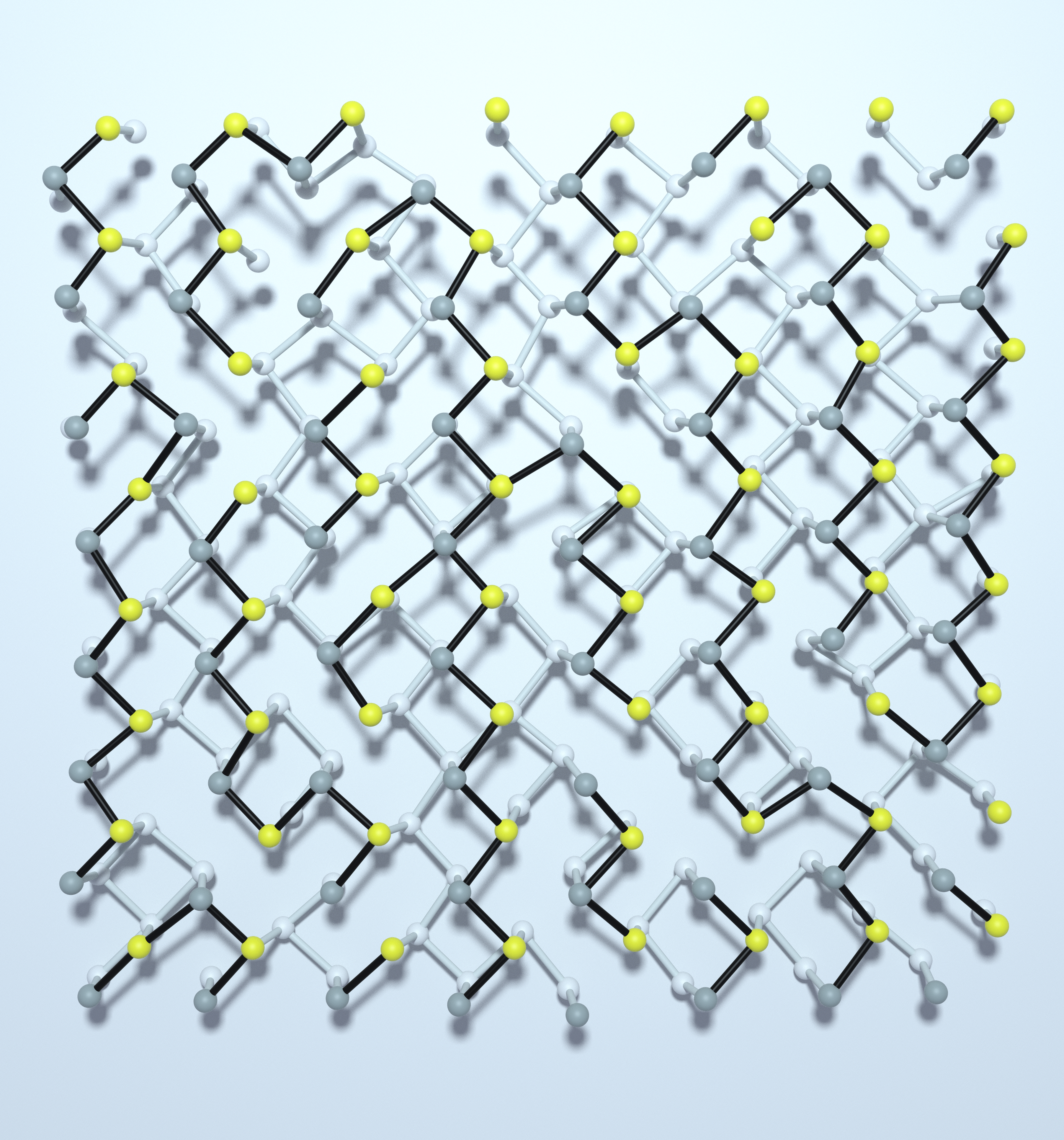
Projects
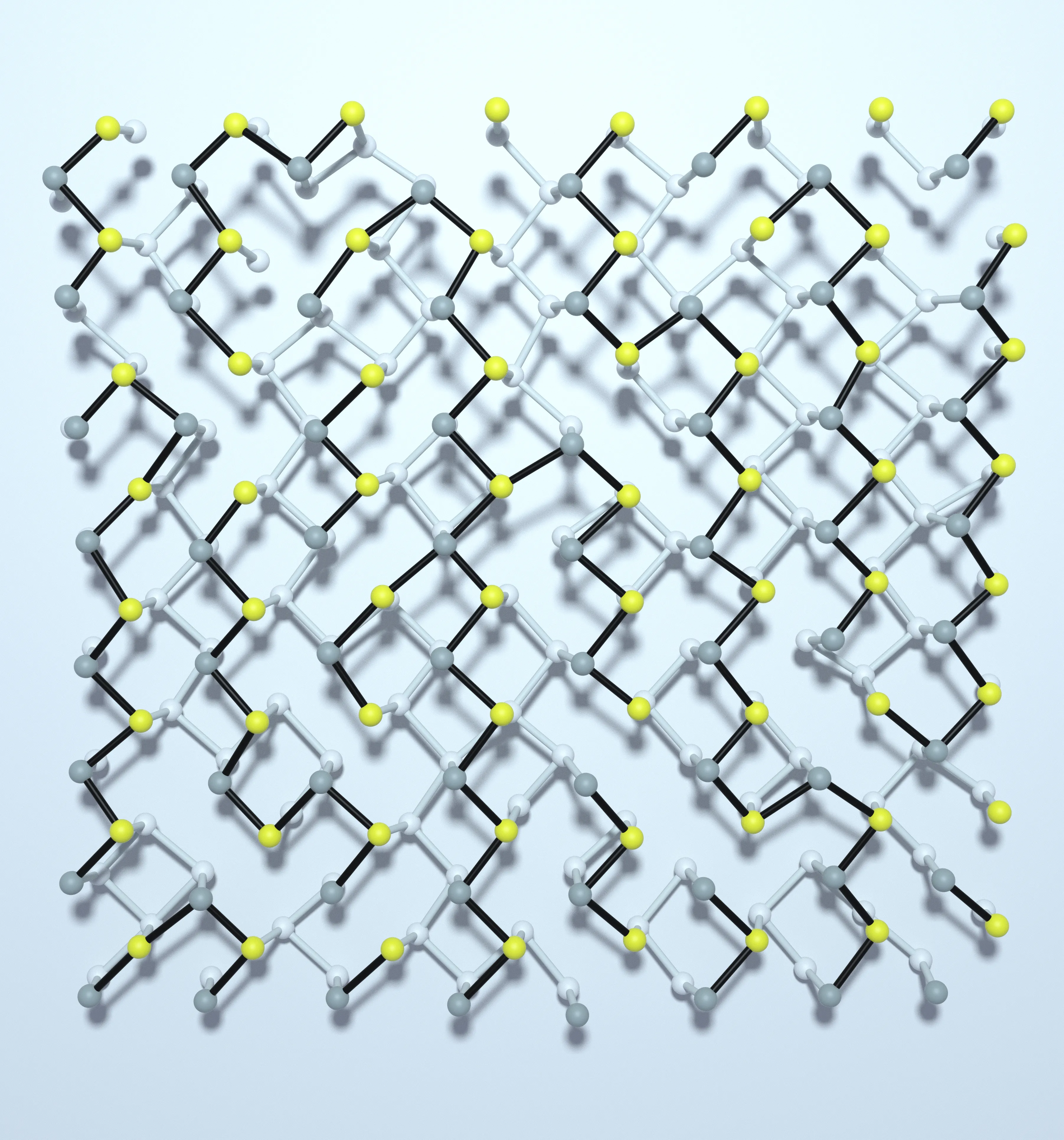
Two-Dimensional Disorder in Black Phosphorus and Monochalcogenide Monolayers
Identifies a critical energy scale governing the onset of structural disorder in black phosphorus and monochalcogenide monolayers, dividing these 2D materials into two classes: those that melt directly, and those (GeS, GeSe, SnS, SnSe) that undergo an order-disorder phase transition near room temperature first. The transition is modelled with a planar Potts model and connected to the experimentally observed Cmcm phase in bulk SnSe.
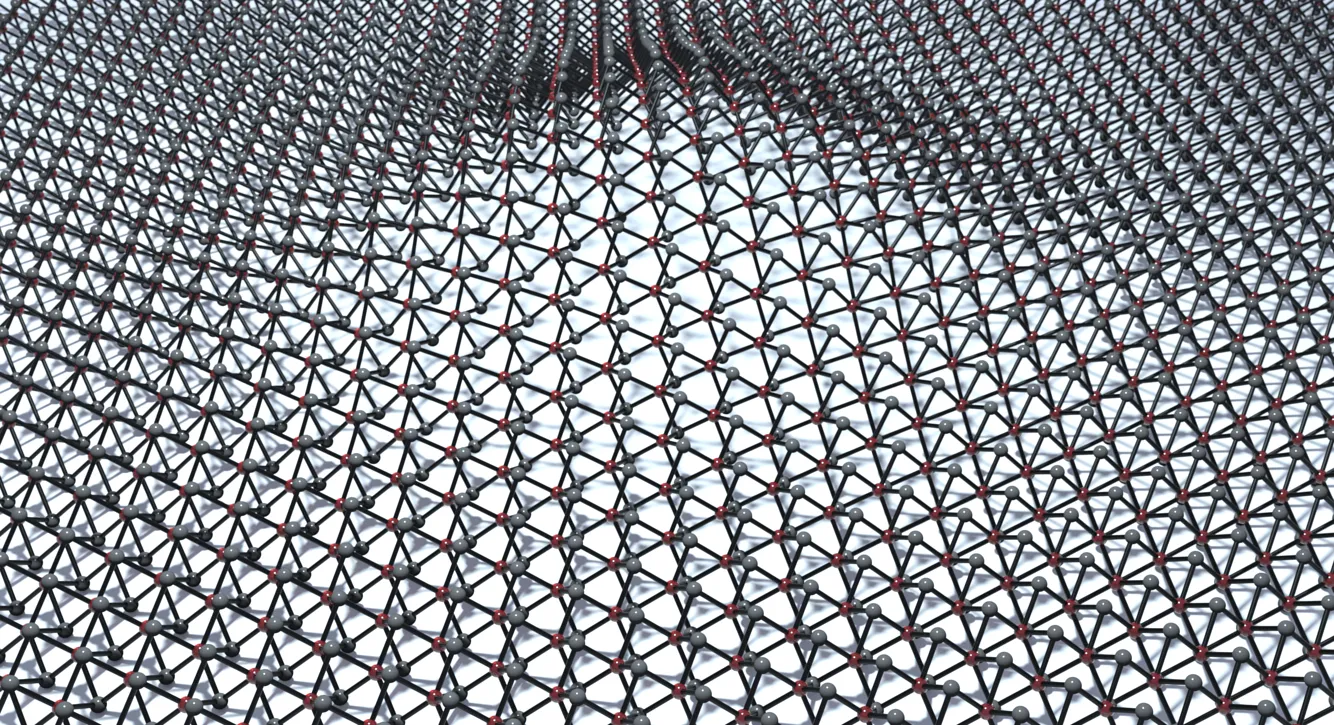
Quantitative Chemistry and the Discrete Geometry of Conformal Atom-Thin Crystals
Shows that the chemical properties of atom-thin crystals — hybridization angles, bond lengths, reactivity — can be read directly from the discrete geometry of their atomic positions, even in the presence of defects. The pyramidalization angle, a key chemically significant measure, turns out to be linearly proportional to the mean curvature of the crystal surface.
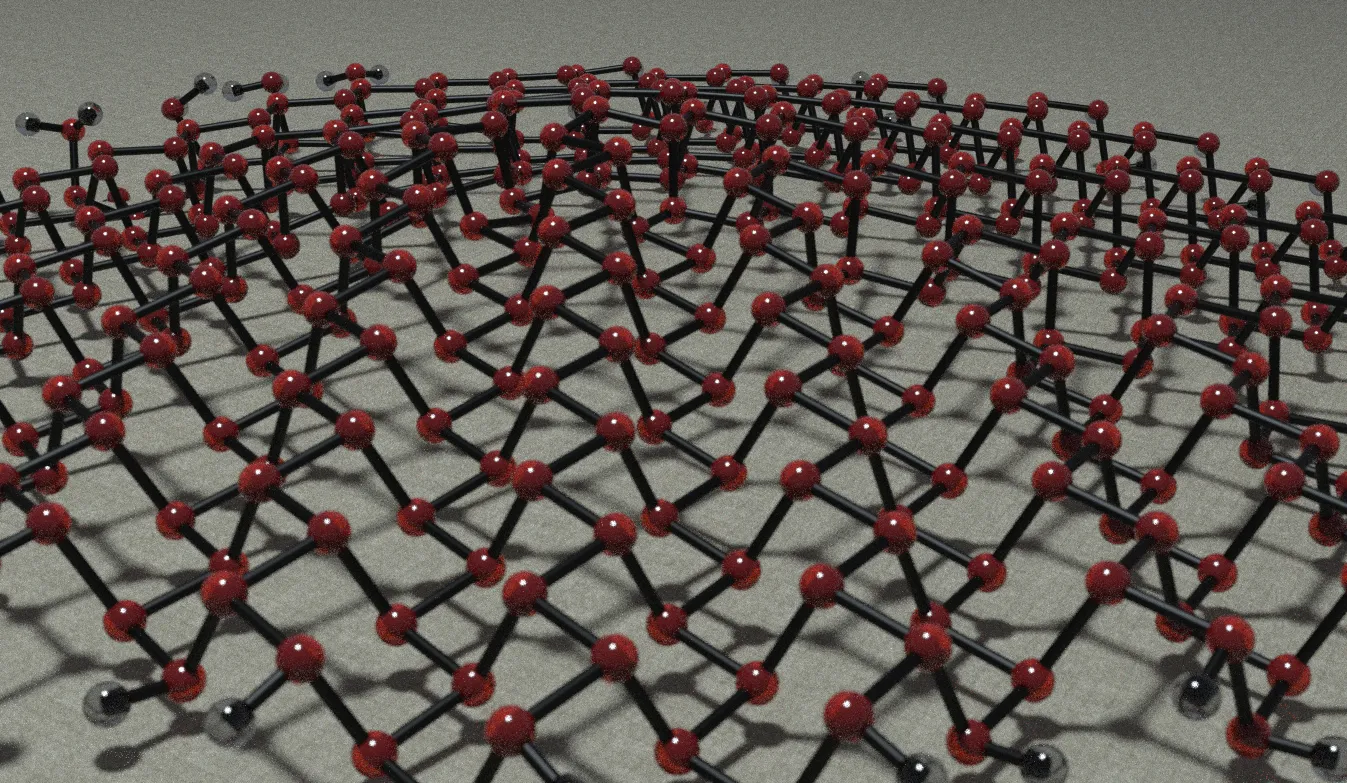
Strain and the Optoelectronic Properties of Nonplanar Phosphorene Monolayers
Shows that non-planarity in phosphorene monolayers directly reduces the semiconducting band gap, regardless of allotrope, providing an optical method for detecting local structural defects. The geometric deformation is characterised using discrete differential geometry, and the approach is extended to classify other 2D materials by their crystal geometry.
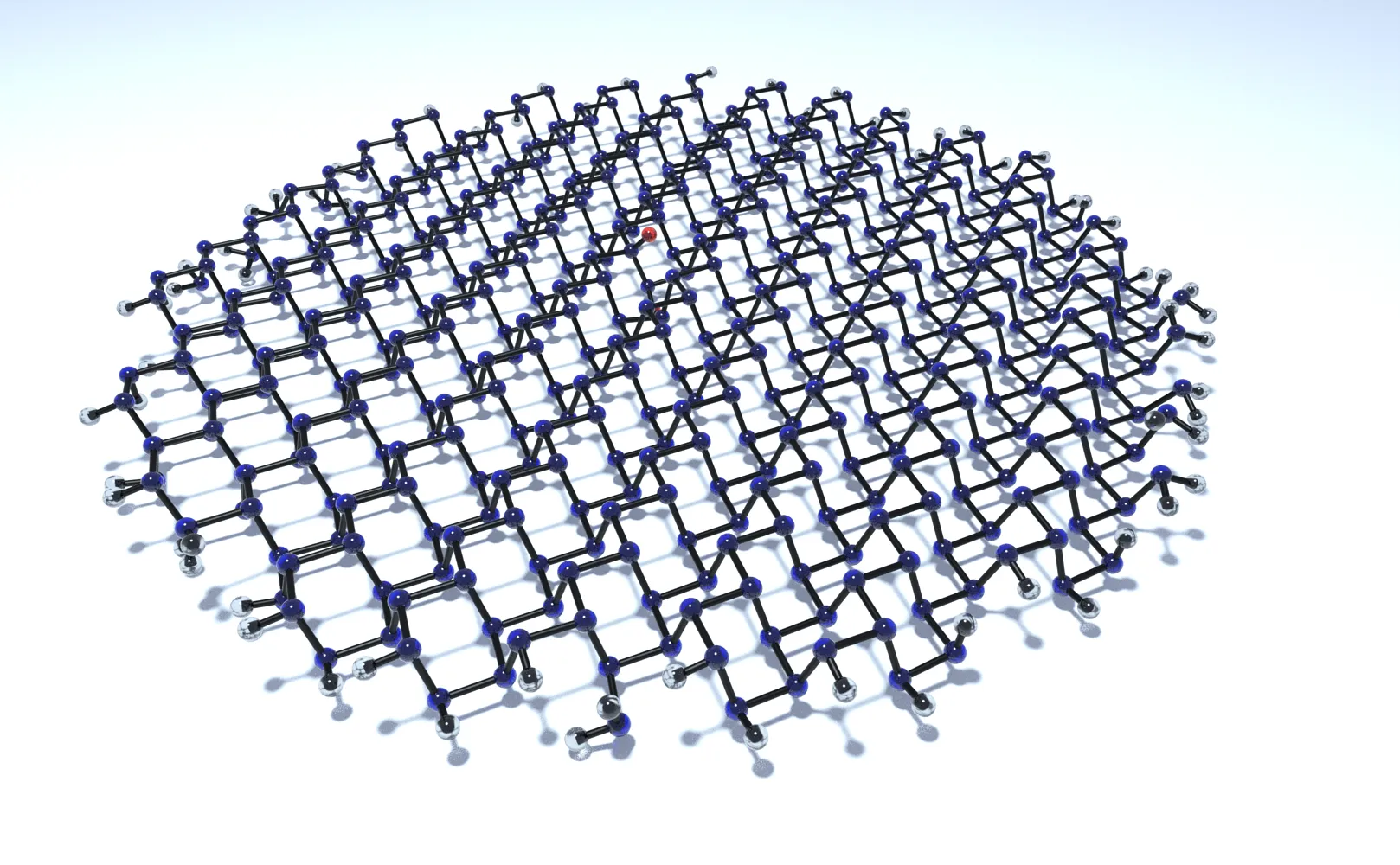
Intrinsic Defects, Fluctuations of the Local Shape, and the Photo-Oxidation of Black Phosphorus
Shows that intrinsic structural defects in black phosphorus act as sites for photo-oxidation by dramatically lowering the energy barrier for oxygen bonding — from over 10 eV in pristine material down to 1.6–6.8 eV at defect sites — making the material vulnerable to degradation under ordinary visible and UV light. The local geometry of defects is characterised using discrete differential geometry.